
By Paul Eso
*Reject Abuja restructuring communiqué
*Propose 10-region structure, resource control, regional police
*Insist on Rivers, Anioma, others in proposed Igbo Region
*Demand Kanu’s release, restructuring before May 2027
Barely four months to the 2027 general elections, Igbo leaders, under the umbrella of Igbo Leaders of Thought, ILT, have called for the temporary suspension of elections pending the completion of Nigeria’s restructuring exercise.
This is as the leaders proposed a 10-region political structure while rejecting the communiqué issued at the Abuja restructuring conference of August 20, 2026.
The group, which also demanded the unconditional release of the detained leader of the Indigenous People of Biafra, IPOB, Nnamdi Kanu, said the restructuring exercise should be concluded before May 2027, with elections subsequently conducted under the new constitutional arrangement.
It also insisted on the creation of a united Igbo Region extending to the Atlantic coast, incorporating Abia, Anambra, Ebonyi, Enugu, Imo, prospective Anioma, Rivers State and Igbo communities in parts of Akwa Ibom, Bayelsa, Benue, Cross River, Edo and Kogi states.
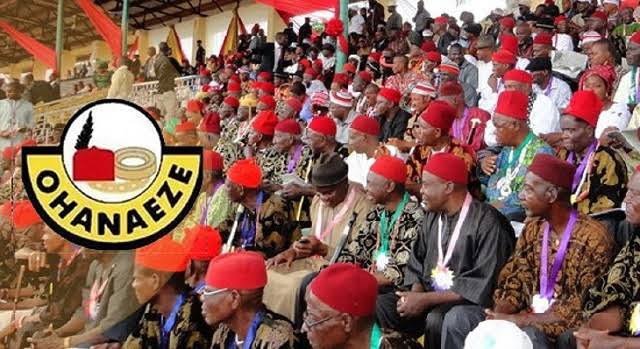
The position was contained in a statement titled, “Igbo Position on the Restructuring of Nigeria,” dated September 16, 2026, and signed by Emeritus Prof. Elochukwu Amucheazi, President-General of the ILT; Sen. John Azuta-Mbata, President-General of Ohanaeze Ndigbo; Prof. Dozie Chukwuokolo, Secretary-General, ILT; Amb. Uche Ajulu-Okeke, adviser Igbo delegation; Dr. Katchi Ononuju, deputy leader Igbo delegation; and Prof. Obasi Igwe, leader of Igbo delegation to the Abuja conference.
The organisation said restructuring was necessary to address what it described as the country’s foundational problems, arguing that the 1914 amalgamation was imposed without the consent of the constituent nationalities.
It said: “By 2014 many had come to the understanding that the problem is foundational: that the non-consensual nature of the ‘union’ would continue to make it a violent, shaky and largely unproductive experiment; that with an anachronistic basis the superstructure would sooner or later eventually collapse.
“The group added that “instead of the exercise in futility that inheres in building from the top, it is more rational to build from below, so as to have a better and stable constitutive union of the people than an imposed arrangement from above benefiting only a few.”
It said restructuring should be based on ethno-linguistic cultural groups, adding that granting such groups some degree of self-determination would lay the foundation for peaceful coexistence and address the national question.
Suspension of elections
On the timing of the exercise, the ILT proposed that restructuring should be concluded before May 2027, with elections temporarily suspended until the process was completed.
Under its general principles of restructuring, the group stated: “Duration of restructuring exercise should conclude before May 2027, with elections temporarily put on hold by an act of necessity, and resumed on post-restructuring principles.
“The group said the restructuring process should enable Nigerians to determine the political and constitutional arrangement they desired through regional or nationwide referendums.
It stated that it supported “the right to self-determination for Nigeria’s ethnic nationalities, regardless of size,” and upheld the principle that regions should be based on “ethno-linguistic civilizations or groupings thereof.”
Demand Kanu’s release
The ILT also called for the immediate listing of Kanu’s long-delayed court case for accelerated hearing and his unconditional release.
It said the release and rehabilitation of political prisoners, particularly Kanu and his colleagues, would help build confidence and trust in discussions on Nigeria’s future.
“The Igbo see in the unconditional release and rehabilitation of all political prisoners, above all Mazi Nnamdi Kanu and his colleagues, as maintained by the Igbo delegation at the recent Abuja Conference, as a gateway to mutual trust and confidence in discussions on the future of Nigeria.”
It also renewed its support for regional referendums or a nationwide referendum conducted by an independent body to enable Nigerians decide on the country’s future constitutional arrangement.
Propose 10-region structure
The organisation proposed a 10-region structure to replace the existing states, local government areas and geopolitical zones, with five coastal regions in the South and five riparian regions in the North.
“Regions based on single-ethnic or consenting multi-ethnic nationalities, to replace States, LGAS, Geopolitical Zones, North, South, East, West, etc paradigms. 5 coastal Regions in the South and 5 riparian Regions in the North are proposed by the Igbo, with relevant maps.”
On resource control, it stated: “Resource ownership and control reverts to the Regions, which would fund the centre on agreed terms.”
The group also proposed military and security reorganisation to achieve a balance between the regions, saying regional police should be one element of a broader security arrangement.
It said: “Military-security reorganization to achieve security balance between Regions, of which Regional police is only one element.”
On the proposed distribution of powers, the ILT said it supported the abolition of the concurrent legislative list, with exclusive and residual powers retained by the federal and regional governments respectively.
It further proposed a mixed private-public free enterprise economy and a secular political system, with religion separated from the state and political affairs.
The organisation said all southern regions should have contiguous access to the coast and retain their traditional coastal ports, while northern regions should border either the Niger or Benue rivers.
It stated that the three proposed Middle Belt regions could merge into one or two, while portions of the South could merge with the Igbo or Yoruba regions to create larger eastern or western regions and reduce the number of regions.
Rivers, Anioma, others in proposed Igbo Region
The ILT maintained that the proposed Igbo Region should extend beyond the five states currently recognised as the South-East geopolitical zone to include Igbo-speaking communities in Rivers, Delta and other neighbouring states.
It said Igbo youths were opposed to what it described as the balkanisation of the Igbo nation and demanded a single, undivided region extending to the coast.
The statement said: “Igbo youths fully support the restructuring of Nigeria on the basis of ethno-linguistic cultural civilizations, and condemn any selective application of that general principle to undermine Igbo homogeneity.”
They demand a single and undivided Igbo Region of united Abia, Anambra, prospective Anioma, Ebonyi, Enugu, Imo, Rivers States down to the coast, plus the Igbo communities in Akwa Ibom, Bayelsa, Benue, Cross River, Edo, and Kogi states.
“Igbo youths warn against adding more injustice to existing ones and the further fragmentation of communities in the guise of restructuring them.
They demand a history or evidence-based examinations, especially colonial and pre-colonial records in case of competing territorial claims.”
On the coastal question, the organisation argued that “the Igbo have been a coastal nation from creation, identified as the ‘Opuu’ and part of the Ethiopians by the earliest 15th century European explorers. So, the Igbo have never been landlocked by anyone or anything, and are not ‘struggling’ to gain access to the coast they already pioneered and belong to.”
The group specifically listed Bonny, Igweocha, or Port Harcourt, Okrika, and Opobo among the coastal areas it wants included in the proposed Igbo Region.
The ILT said the proposed regional arrangement should not be interpreted as a demand to deny other communities their rights, insisting that its position was based on what it described as historical and cultural connections.
Reject Abuja restructuring communiqué
The leaders also rejected the communiqué issued after the August 20, 2026 Abuja restructuring conference, accusing the organisers of selectively applying the principle of ethno-linguistic restructuring and disregarding the position of the Igbo delegation.
The statement said: “The organizers’ breached several of their own organiz rules, the most critical being the selective selective application of the principle of ethno-linguistic cultural restructuring, in a fixated mindset against the Igbo.”
According to the ILT, the organisers “never even thought the Igbo had ever had or should have ports, and repeatedly referred to the Igbo in the Rivers State, Anioma, Edo, Kogi and other States as ‘minorities to the Igbo.'”
The group alleged that the conference “ignored consensus and ‘voted’ approve forcefully conscripted Anioma into certain Delta Region where they would be an unwilling minority; Igbanke and other westward frontier communities were thrown into a Benin Region; Rivers Igbo became attached to Ogoni Region while throwing out Bonny and Opobo to Ijaw to landlock Port Harcourt and the Ikwerre and other Rivers Igbo themselves.”
The organisation said it rejected the outcome because it considered the proposed arrangement inconsistent with the principle of restructuring based on ethnic and linguistic identities.
It further alleged that the organisers abandoned consensus in favour of voice voting, excluded its delegation from the communiqué drafting group and announced decisions without adequately considering objections raised by the Igbo representatives.
“The organizers went ahead to yet again breach their other rule that decisions would be arrived at by consensus. They reverted to a voice-voting; which arbitrary change of rules suggested another bad faith and ill-intention, and not in alignment with series of constitutional and similar conferences that adopted consensus as best able to guarantee popular acceptance and stability.”
It also rejected suggestions that the Igbo delegation walked out of the conference. According to the statement, the delegation remained until the end of the meeting in the hope that its concerns would be addressed, leaving only after the organisers had held a press conference.
The group said it remained committed to restructuring based on ethno-linguistic nationalities and would continue engaging other stakeholders until an agreement was reached.
“The Igbo enjoin the Federal and State governments and all Nigerians to approach the restructuring issue with utmost sincerity, sense of justice, and fair play, with a mindset for outcomes equitable to all citizens”, it stated.