
*Warns against return to subsidy regime
*Says global oil shock exposes country’s structural weakness
…Calls for production boost, windfall ring-fencing, others
By Nnamdi Ojiego,
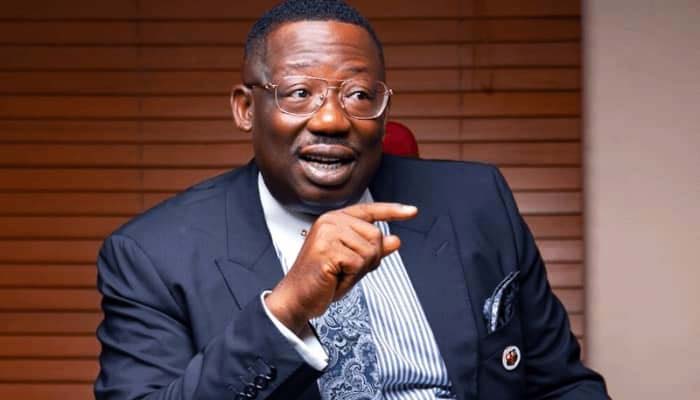
The ongoing oil price surge triggered by the US/Israel and Iran conflict has exposed deep structural weaknesses in Nigeria’s petroleum sector, with economist, policy advocate, and former President of the Nigerian Association of Chambers of Commerce, Industry, Mines, and Agriculture, NACCIMA, Hon. Dele Oye, warning that any attempt to impose fuel price caps would reverse hard-won reforms and push the country back into a costly subsidy regime.
Oye, who chairs the Alliance for Economic Research and Ethics Ltd/GTE, said while global crude prices have climbed sharply since late February, Nigeria remains unable to fully benefit due to low production levels, existing contractual obligations, and operational inefficiencies.
Brent crude is currently trading between $102 and $114 per barrel, significantly above the Federal Government’s 2026 budget benchmark of $64.85. This creates a theoretical premium of up to $49 per barrel. However, Oye noted that much of the projected windfall remains out of reach.
According to data cited from PwC Nigeria, the price surge could translate to a gross premium of about $55.5 million daily. Yet, Nigeria’s production shortfall estimated at about 1.46 million barrels per day, against a budget target of 1.84 million barrels means substantial revenue losses. He added that every 100,000 barrels per day deficit represents roughly $4.1 billion in lost annual earnings.
“Much of Nigeria’s crude is already tied to forward sales and refinery obligations, leaving limited volumes for immediate gains,” Oye said, recalling that a similar opportunity was missed during the Russia-Ukraine war when high oil prices failed to translate into meaningful fiscal gains.
The former NACCIMA President stressed that although projections suggest potential windfall revenues in excess of ₦28 trillion annually, actual inflows will be far lower after accounting for production constraints, costs, and contractual deductions.
Subsidy
Oye cautioned strongly against calls for fuel price caps, describing them as economically unviable under Nigeria’s current framework.
He argued that price controls would effectively reintroduce fuel subsidies, which the government scrapped in 2023 after years of fiscal strain.
“At current pump prices ranging from ₦1,200 to ₦1,400 per litre, any artificial cap would create massive fiscal liabilities. The arithmetic of subsidies does not change with higher oil prices,” he said.
The economist also warned that rigid price controls could disrupt fuel supply chains, discourage importers, and encourage the growth of black markets. Citing global research, he noted that such policies often lead to product shortages in developing economies during periods of price volatility.
Oye further pointed to the emergence of the Dangote Refinery as a key factor, explaining that forcing price caps could undermine its commercial viability or compel the government to resume costly compensation schemes.
Global comparisons
While some countries have adopted emergency measures to cushion the impact of rising energy costs, Oye said Nigeria’s fiscal position limits its options.
Countries like South Korea and Germany have implemented price controls, tax adjustments, and strategic reserve releases, backed by stronger fiscal buffers. Others, including Indonesia, continue to sustain large-scale subsidies, though at significant cost.
In contrast, Oye said Nigeria must avoid policies that could deepen fiscal vulnerabilities.
Measures
To navigate the current crisis, Oye proposed a mix of immediate and medium-term measures aimed at strengthening resilience and capturing available gains.
He called for the introduction of naira-denominated crude sales to local refineries to ease foreign exchange pressure, alongside the release or establishment of strategic petroleum reserves to stabilize supply.
He also advocated an emergency fertiliser distribution programme ahead of the planting season, expansion of compressed natural gas infrastructure, and improved security around oil assets to boost production.
Central to his recommendations is the need to ring-fence excess oil revenues. Oye urged the government to channel windfalls above the budget benchmark into the Nigeria Sovereign Investment Authority and the Excess Crude Account to prevent diversion into recurrent spending.
At the sub-national level, he advised state governments to focus on subsidising public transport systems rather than fuel consumption, while promoting cleaner alternatives such as liquefied petroleum gas for households.
Economic discipline
Oye concluded that Nigeria stands at a critical juncture, with the Iran-induced oil shock offering both opportunity and risk.
“The lesson from past oil booms is clear. Gains are often temporary, but the consequences of poor policy choices can linger,” he said.
He maintained that the country’s priority should be converting short-term price gains into long-term structural strength, rather than pursuing populist measures that could undermine fiscal stability.